vd_header
We are
INTECO

VD/VOD-VERFAHREN

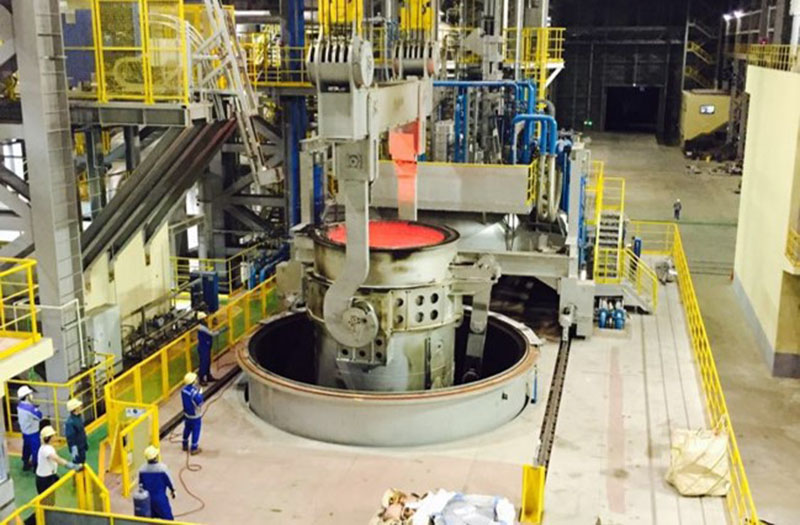
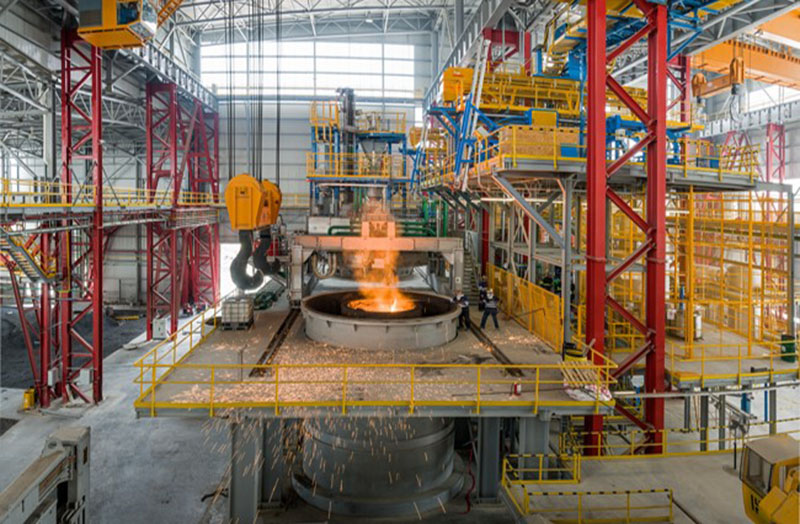
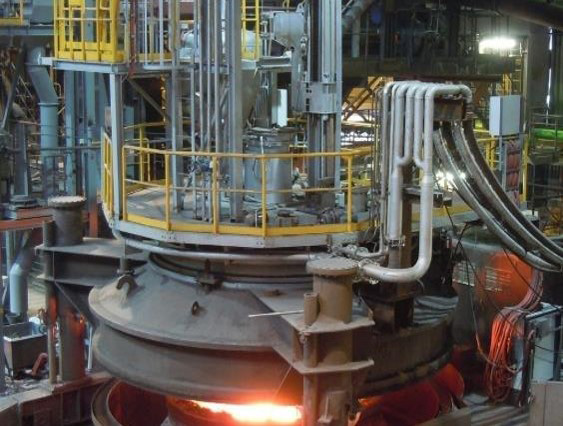
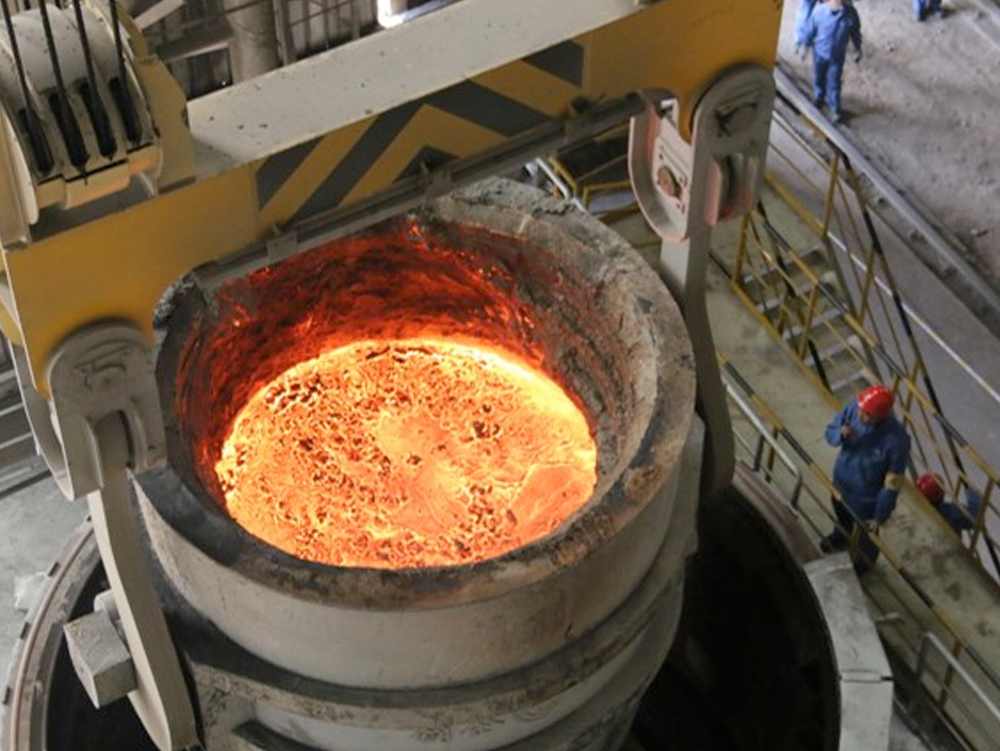
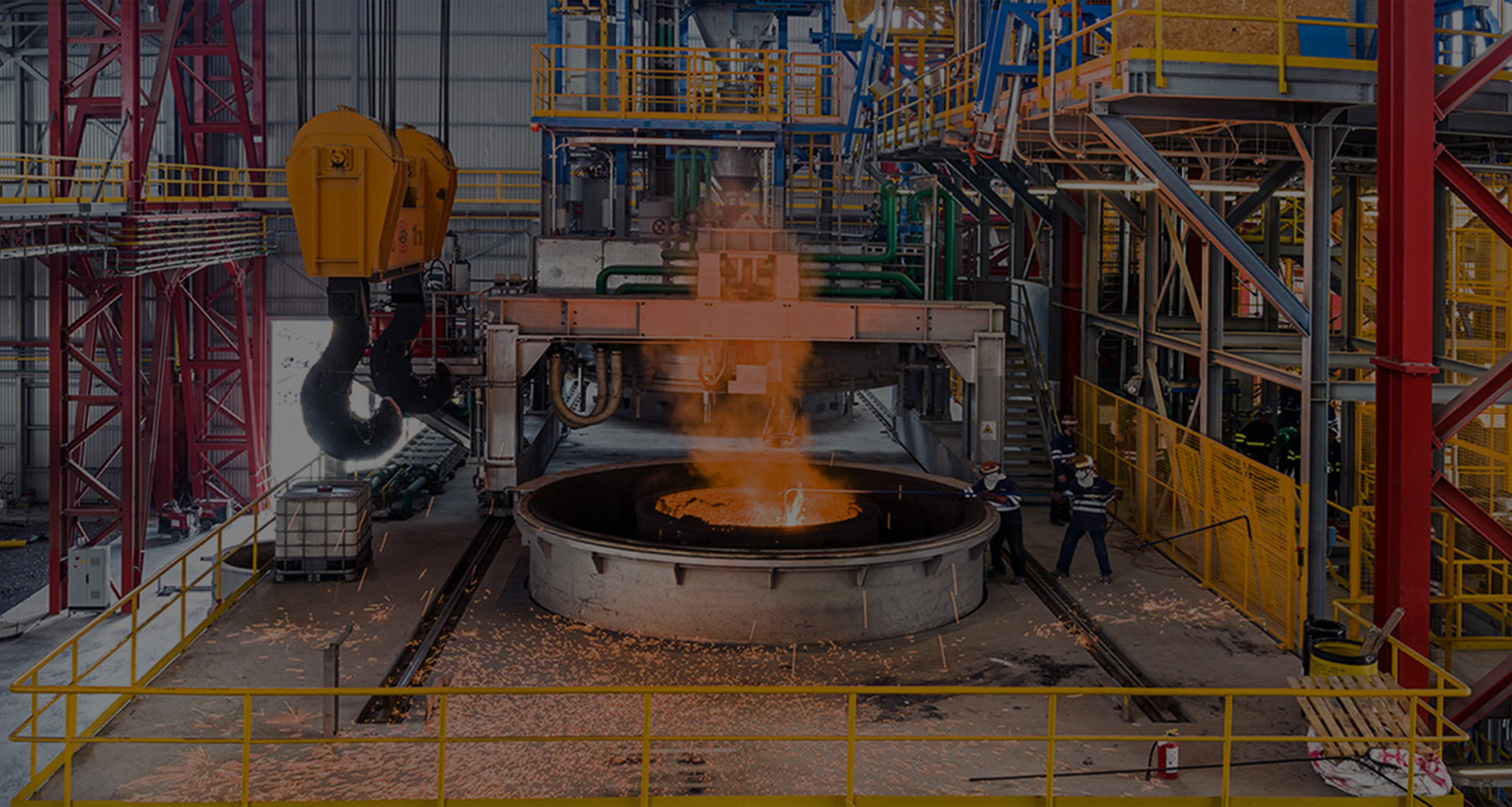
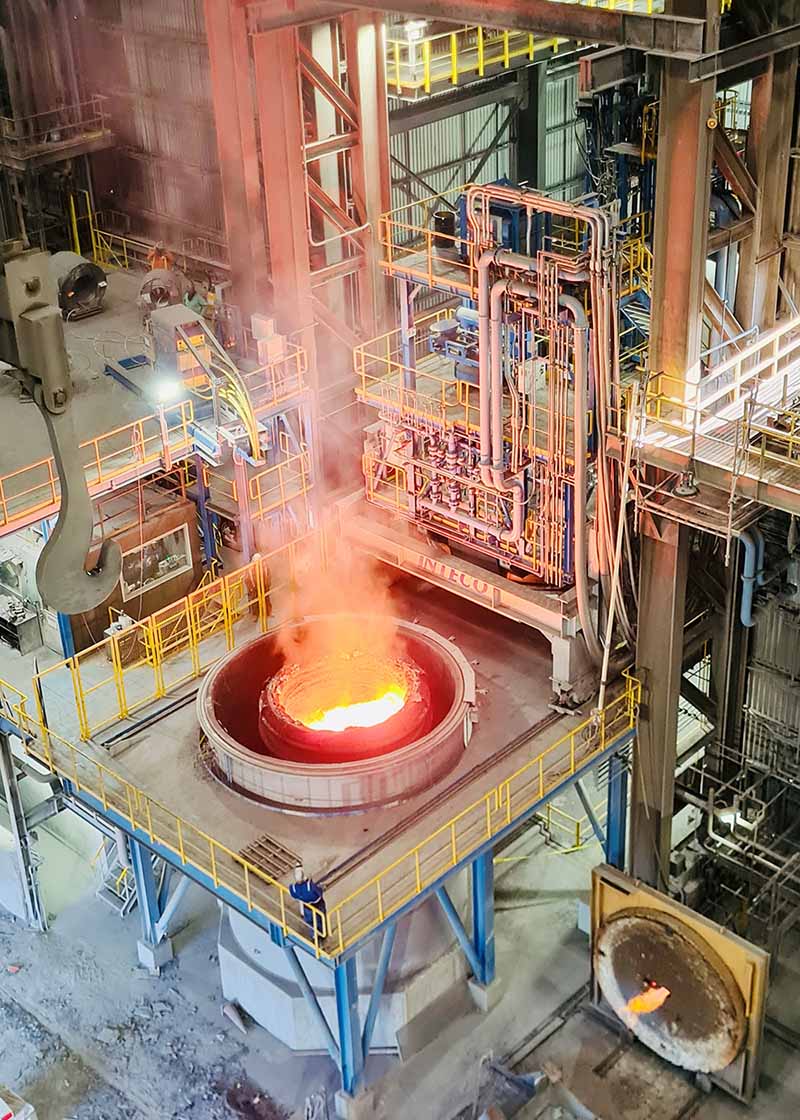
Das VD-Verfahren zählt zu den am weitesten verbreiteten Entgasungsverfahren. Dabei wird die gesamte Pfanne in einem hermetisch abgedichteten Vakuumgefäß abgestellt und während der Vakuumbehandlung über einen oder mehrere Spülsteine mit Inertgas gespült. Zur Erzeugung des für die Entgasung erforderlichen Unterdrucks kommen sowohl Dampfstrahlpumpen als auch mechanische Pumpen zum Einsatz. Ziel der Vakuumbehandlung ist eine Verringerung der Gehalte an Kohlenstoff, Sauerstoff, Stickstoff und Wasserstoff. Zusätzlich installierte Vakuumschleusen zur Legierungsaufgabe ermöglichen eine Feineinstellung der chemischen Zusammensetzung auch während der Vakuumbehandlung. Zu den wesentlichen Vorteilen der Pfannenentgasung zählen die hervorragende Homogenisierung sowie eine hohe Ausbringung an Legierungselementen.

Der VOD-Prozess ermöglicht die Erzielung tiefer Kohlenstoffgehalte bei gleichzeitig hohem Chromausbringen durch Sauerstoffeinblasen mittels Lanze während der Vakuumbehandlung.

Die meisten Produktionspläne erfordern heutzutage eine Kombination aus VD- und VOD-Betrieb, weshalb das Design sowie alle erforderlichen Komponenten dieser Anlagen für beide Betriebsarten ausgelegt sind.

Allgemein bietet die VD/VOD-Behandlung die folgenden Prozessvorteile:

  • Einsatz günstiger Legierungselemente mit höherem Kohlenstoffgehalt
  • Reduzierung der Produktionskosten
  • Erhöhung der Produktqualität durch niedrige Gasgehalte
  • Möglichkeit zur Produktion von ELC-Qualitäten mit minimiertem Chromverlust
  • Einstellung enger Analysentoleranzen
  • Hohes Ausbringen an Chrom
  • Tankanlagen: Einzel- oder Doppelstandentgasung
  • Schmelzgewicht bis 350t
  • Pfannenentgasung: DETEM für kleine Schmelzgrößen
  • Einsatz von Dampfstrahlpumpen oder mechanischen Vakuumpumpen
  • Legierungszugabe unter Vakuum

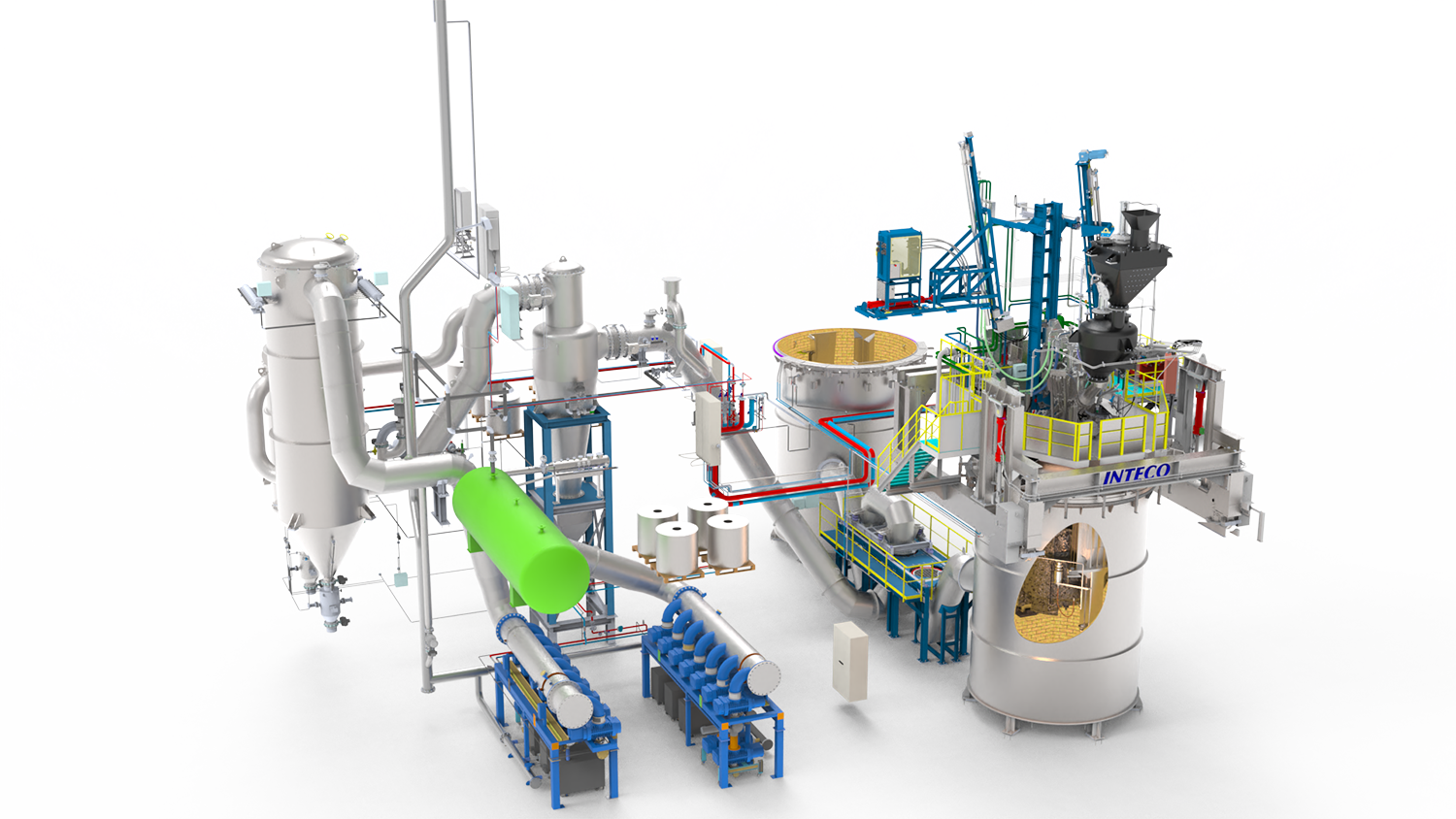
Die richtigen Nebenanlagen sind entscheidend für eine effiziente, hochwertige und sichere Produktion. Präzise Temperaturmessungen, automatische Probeentnahmen und robuste und hochtemperaturbeständige Komponenten wie der Gaskuppler erhöhen nicht nur die Qualität, sondern auch die Arbeitssicherheit. Darüber hinaus hilft INTECOs „Zero-Leackage“-Design Abpump- und Behandlungszeiten kurz zu halten und somit Betriebskosten zu senken. Ausgeklügelte Konzepte für Tankwägen und Pfannendeckel, runden das ganze ab.

1

1) Vakuumpumpen

Heute kommen bei Tankentgasungsanlagen meist mechanische Vakuumpumpen zum Einsatz. Durch Filter und Gaskühler ist sowohl ein VD- als auch VOD-Betrieb mit mechanischen Pumpen möglich. Natürlich können INTECO-Anlagen auch mit herkömmlichen Dampfstrahlvakuumpumpen (auch in Kombination mit Wasserringpumpen) geliefert werden.

2

2) Drahteinspulmaschine

Drahteinspulen ist die präziseste Methode, um kleine Mengen von Desoxidationsmitteln und Legierungen in die Schmelze einzubringen. INTECO liefert Drahteinspulmaschinen zusammen mit dem gesamten Drahtführungssystem vom Drahtbundlager zur Maschine.

Mehr erfahren 🢒

3

3) Sauerstofflanze

Die wassergekühlte Sauerstofflanze wird auf die notwendige Blasrate ausgelegt und wird zum chemischen Heizen oder Entkohlen verwendet. Die patentierte Stopfbuchse ermöglicht einen reibungslosen Betrieb. Als Alternative können auch verzehrende Sauerstofflanzen zum Einsatz kommen.

4

4) Manipulatoren- und Roboter für Messungen

Temperaturmessungen, Messung des Wasserstoffgehalts und Probenahmen, die von Robotern oder Manipulatoren durchgeführt werden, gewährleisten konstante und reproduzierbare Ergebnisse. Darüber hinaus reduzieren automatische Probemanipulationssysteme notwendige manuelle Arbeitsschritte.

5

5) Vakuumschleuse

Die Vakuumschleuse ermöglicht die Legierungsmittelzugabe unter Vakuum.

6

6) Pfannendeckel

Ein Hitzeschild sowie ein Pfannendeckel schützen den Vakuumdeckel vor Strahlungswärme sowie auch Stahl- und Schlackespritzern. Durch die wassergekühlte Ausführung kann auf Feuerfestmaterial verzichtet werden. Der Pfannendeckel dient als Freiborderhöhung und ermöglicht hohe Spülraten, die eine sehr effektive Entgasung gewährleisten.

7

7) Tankwagen

INTECO bietet für jede Kundenanforderung die richtige Lösung: Je nach Kapazitätsanforderung und Platzangebot können Einzel- oder Doppelstand-Anlagen realisiert werden. Dabei kommen Tankwägen mit fixem Deckel oder Deckelwagen mit fixem Tank zum Einsatz.

8

8) Gaskuppler

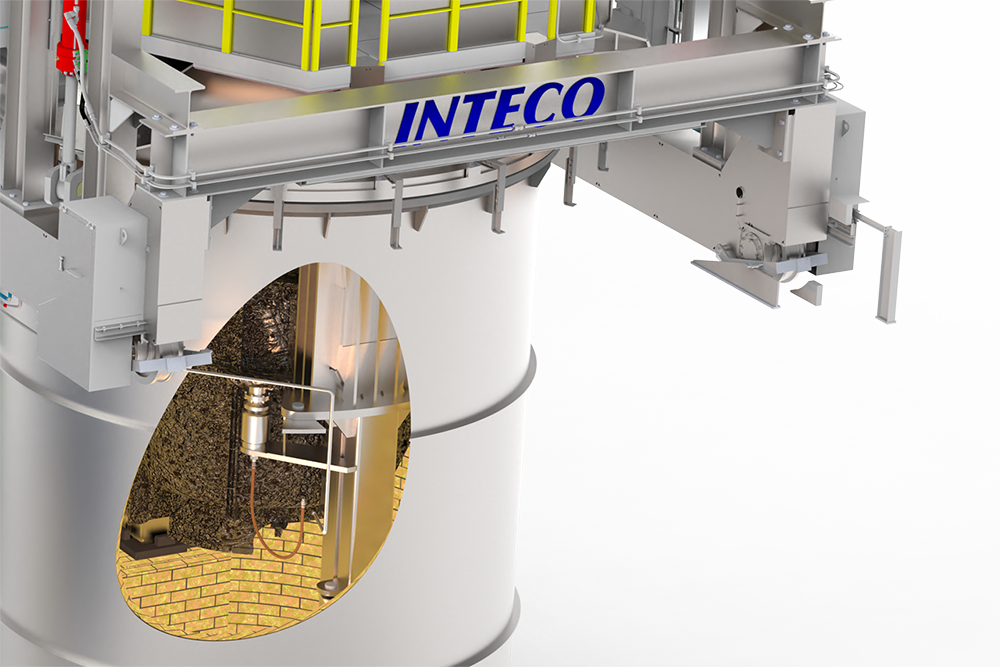
INTECOs Gaskuppler sind hochtemperaturbeständig und speziell für den Einsatz im Vakuumtank konzipiert. Sie ermöglichen eine vollautomatische Verbindung mit der Spülgasregelstrecke und erhöhen die Arbeitssicherheit drastisch.
Mehr erfahren 🢒

9

9) Zentralstutzen

Ein Alleinstellungsmerkmal der INTECO VD/VOD-Anlage ist das konsequente „Zero-Leakage-Design“. Durch den Zentralstutzen erfolgen alle Operationen, wie Drahteinspulen, Temperaturmessung, Probenahme. Da nur eine einzige Arbeitsöffnung im Vakuumdeckel erforderlich ist, kann die Gefahr einer potenziellen Leckage dramatisch gesenkt werden. Daraus folgen sehr kurze Abpump- und Behandlungszeiten sowie niedrige Betriebskosten.
Vakuumpumpen


Heute kommen bei Tankentgasungsanlagen meist mechanische Vakuumpumpen zum Einsatz. Durch Filter und Gaskühler ist sowohl ein VD- als auch VOD-Betrieb mit mechanischen Pumpen möglich. Natürlich können INTECO-Anlagen auch mit herkömmlichen Dampfstrahlvakuumpumpen (auch in Kombination mit Wasserringpumpen) geliefert werden.

Drahteinspulmaschine


Drahteinspulen ist die präziseste Methode, um kleine Mengen von Desoxidationsmitteln und Legierungen in die Schmelze einzubringen. INTECO liefert Drahteinspulmaschinen zusammen mit dem gesamten Drahtführungssystem vom Drahtbundlager zur Maschine.

Sauerstofflanze


Die wassergekühlte Sauerstofflanze wird auf die notwendige Blasrate ausgelegt und wird zum chemischen Heizen oder Entkohlen verwendet. Die patentierte Stopfbuchse ermöglicht einen reibungslosen Betrieb. Als Alternative können auch verzehrende Sauerstofflanzen zum Einsatz kommen.

Manipulatoren- und Roboter für Messungen


Temperaturmessungen, Messung des Wasserstoffgehalts und Probenahmen, die von Robotern oder Manipulatoren durchgeführt werden, gewährleisten konstante und reproduzierbare Ergebnisse. Darüber hinaus reduzieren automatische Probemanipulationssysteme notwendige manuelle Arbeitsschritte.

Vakuumschleuse


Die Vakuumschleuse ermöglicht die Legierungsmittelzugabe unter Vakuum.

Pfannendeckel


Ein Hitzeschild sowie ein Pfannendeckel schützen den Vakuumdeckel vor Strahlungswärme sowie auch Stahl- und Schlackespritzern. Durch die wassergekühlte Ausführung kann auf Feuerfestmaterial verzichtet werden. Der Pfannendeckel dient als Freiborderhöhung und ermöglicht hohe Spülraten, die eine sehr effektive Entgasung gewährleisten.

Tankwagen


INTECO bietet für jede Kundenanforderung die richtige Lösung: Je nach Kapazitätsanforderung und Platzangebot können Einzel- oder Doppelstand-Anlagen realisiert werden. Dabei kommen Tankwägen mit fixem Deckel oder Deckelwagen mit fixem Tank zum Einsatz.

Gaskuppler


INTECOs Gaskuppler sind hochtemperaturbeständig und speziell für den Einsatz im Vakuumtank konzipiert. Sie ermöglichen eine vollautomatische Verbindung mit der Spülgasregelstrecke und erhöhen die Arbeitssicherheit drastisch.

Zentralstutzen


Ein Alleinstellungsmerkmal der INTECO VD/VOD-Anlage ist das konsequente „Zero-Leakage-Design“. Durch den Zentralstutzen erfolgen alle Operationen, wie Drahteinspulen, Temperaturmessung, Probenahme. Da nur eine einzige Arbeitsöffnung im Vakuumdeckel erforderlich ist, kann die Gefahr einer potenziellen Leckage dramatisch gesenkt werden. Daraus folgen sehr kurze Abpump- und Behandlungszeiten sowie niedrige Betriebskosten.

Digitalisierung und Smart Production sind die treibenden Kräfte für Entwicklung und Veränderung in der Stahlbranche. Bei INTECO bieten wir Ihnen nicht nur erstklassiges Engineering im Anlagenbau, sondern auch maßgeschneiderte digitale Lösungen, die den anspruchsvollen Anforderungen unserer Kunden gerecht werden. Überwachen Sie Ihre Produktion effizienter und nutzen Sie die gesammelten Informationen für Anpassungen und Fortschritt.

1

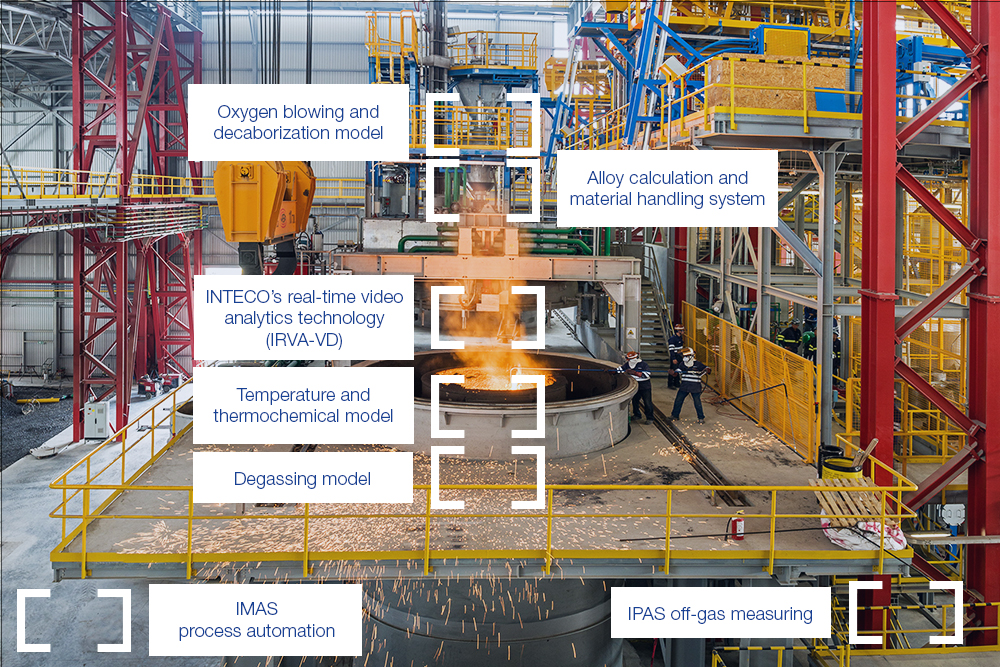
1) Oxygen and decarburization model

to achieve and maintain the target element composition

The oxygen model calculates the required amount of oxygen to achieve target decarburization, considering initial steel samples and current temperature that lead to a physically based oxygen quantity. It uses the basics of the thermochemical and thermodynamic approach and once the vacuum and/or oxygen blowing has started, the decarburization model tracks the oxidation of the elements involved. The chemical composition is updated through close interaction with the thermochemical model.

The decarburization model reacts to the oxygen injection rate and oxidizes the steel according to the thermodynamic evaluations. The decarburization model constantly checks stoichiometric oxidation against kinetic reactions and the temperature gain is back-looped to the temperature model. The degassing model calculates the removal of hydrogen and nitrogen.

2

2) INTECO’s Material Handling System

for precise and fast alloying

INTECO’s Material Handling System Automation offers precise and time-critical alloying for all secondary metallurgy plants. Its recipe-based approach serves various technologies such as positive and negative weighing, shuttles, weighing bands, or hoppers and integrates micro-dosing systems and wire feeding machines. Moreover, it provides fallback modes for redundant feeding lines as well as sequential dosing of materials or material groups to add slag builders and alloys in the correct order.

3

3) INTECO's real-time analytics for VD/VOD (IRVA-VD)

to safely monitor operation

The slag foaming phenomenon in vacuum tank degassers leads to slag overflow and therefore not only reduces productivity and increases the rejection rate, but also presents notable health risks to your employees during ladle rim cleaning and on the caster deck.

INTECO’s transforms any existing camera into a powerful tool for monitoring and optimizing vacuum tank degassing processes. The algorithm evaluates the effectiveness of gas stirring, the exposed stirring eye and the critical slag foaming events through real-time video analysis. This contributes to proactive process management and further improves the accuracy of degassing models.

Learn more 🢒

4

4) Temperature and thermochemical model

for real-time temperature, steel and slag analysis

The temperature model accounts for the temperature losses due to radiation and convection as well as the changes in temperature due to purging, material addition and heating. Temperature changes due to reactions are also taken into account and are therefore coupled with the basic thermochemical model. Both are not only used to calculate the actual heat state but also to predict take-over time and temperature.

The thermochemical model calculates oxide and element activities based on current process conditions and events, current heat state and energy losses and gains. In this context, IMAS modeling includes a thermophysical property library, reaction enthalpies, coefficients for interactions providing the necessary parameters, and coefficients to determine and calculate the activities.

5

5) Degassing model

to calculate the reduction of hydrogen and nitrogen

The degassing model calculates the reduction of hydrogen and nitrogen in the VD system.

6

6) IPAS off-gas measuring system

for measuring the gas composition

The IPAS off-gas measuring system/device for VOD applications includes a gas extraction system, an off-gas analyzer and a flow measurement device. The off-gas analyzer measures CO and CO2 using an infrared photometer, H2 using thermal conductivity and O2 using electromagnetic force measurement. The flow meter works based on ultrasound measurements or hot-wire anemometer and is supplied with temperature and pressure data for normalization to standard cubic meters per hour. The IPAS system is self-calibrating and works with online process models for hybrid decarburization and degassing modelling.

7

7) IMAS process automation

IMAS-PA-VD/VOD provides advanced top-down process guidance through dynamic or static treatment planning and integrated optimization tools. Process supervision is massively improved by the cockpit view and integrated real-time process models. IMAS provides instant real-time information and alerts, based on which the operators can control and steer the process just-in-time. The heat-based data recording stores sensor data, including complex information such as video streams, allowing observation of real-time data for quality assurance and process improvement.
Oxygen and decarburization model

The oxygen model calculates the required amount of oxygen to achieve target decarburization, considering initial steel samples and current temperature that lead to a physically based oxygen quantity. It uses the basics of the thermochemical and thermodynamic approach and once the vacuum and/or oxygen blowing has started, the decarburization model tracks the oxidation of the elements involved. The chemical composition is updated through close interaction with the thermochemical model. The decarburization model reacts to the oxygen injection rate and oxidizes the steel according to the thermodynamic evaluations. The decarburization model constantly checks stoichiometric oxidation against kinetic reactions and the temperature gain is back-looped to the temperature model. The degassing model calculates the removal of hydrogen and nitrogen.

INTECO’s Material Handling System Automation

INTECO’s Material Handling System Automation offers precise and time-critical alloying for all secondary metallurgy plants. Its recipe-based approach serves various technologies such as positive and negative weighing, shuttles, weighing bands, or hoppers and integrates micro-dosing systems and wire feeding machines. Moreover, it provides fallback modes for redundant feeding lines as well as sequential dosing of materials or material groups to add slag builders and alloys in the correct order.

Smart process camera

The smart process camera is a retractable and therefore well protected optical system that directly streams a high-resolution video to the control room to ensure safe low-manpower operation. The optional thermal imaging variant provides a clear view through smoke and dust and serves for automatic stirring adjustment. Additional generated process information such as slag height and stirring eye detection enhances metallurgical model accuracy and safety.

Temperature and thermochemical model


The thermochemical model calculates oxide and element activities based on current process conditions and events, current heat state and energy losses and gains. In this context, IMAS modeling includes a thermophysical property library, reaction enthalpies, coefficients for interactions providing the necessary parameters, and coefficients to determine and calculate the activities.

The temperature model accounts for the temperature losses due to radiation and convection as well as the changes in temperature due to purging, material addition and heating. Temperature changes due to reactions are also taken into account and are therefore coupled with the basic thermochemical model. Both are not only used to calculate the actual heat state but also to predict take-over time and temperature.

Degassing model

The degassing model calculates the reduction of hydrogen and nitrogen in the VD system.

IPAS off-gas measuring system

The IPAS off-gas measuring system/device for VOD applications includes a gas extraction system, an off-gas analyzer and a flow measurement device. The off-gas analyzer measures CO and CO2 using an infrared photometer, H2 using thermal conductivity and O2 using electromagnetic force measurement. The flow meter works based on ultrasound measurements or hot-wire anemometer and is supplied with temperature and pressure data for normalization to standard cubic meters per hour. The IPAS system is self-calibrating and works with online process models for hybrid decarburization and degassing modelling.

IMAS process automation

IMAS-PA-VD/VOD provides advanced top-down process guidance through dynamic or static treatment planning and integrated optimization tools. Process supervision is massively improved by the cockpit view and integrated real-time process models. IMAS provides instant real-time information and alerts, based on which the operators can control and steer the process just-in-time. The heat-based data recording stores sensor data, including complex information such as video streams, allowing observation of real-time data for quality assurance and process improvement.

Projekte

Nucor Darlington

Mechanische Vakuumpumpe Ein-Tankvariante, Deckel verfahrbar mit Vakuumschleuse und sämtlichen Nebenanlagen Type: 110t VD

Taewoong Special Steel

Dampfstrahlvakuumpumpe Zwei-Tankvariante, Deckel verfahrbar mit Vakuumschleuse, O2-Lanze und sämtlichen Nebenanlagen Type: 150t VD/VOD

Grupo FRISA

Mechanische Vakuumpumpe Zwei-Tankvariante, Deckel verfahrbar mit Vakuumschleuse, O2-Lanze und sämtlichen Nebenanlagen Type: 50t VD

Deutsche Edelstahlwerke
Specialty Steel

Dampfstrahlvakuumpumpe Verfahrbarer Vakuumtank, Deckel feststehend mit Vakuumschleuse, O2-Lanze und sämtlichen Nebenanlagen Type: 130t VD/VOD

Taigang Stainless Steel

Dampfstrahlvakuumpumpe Doppelstandanlage Verfahrbarer Vakuumtanks, Deckel feststehend mit Vakuumschleuse, O2-Lanze und sämtlichen Nebenanlagen Type: 45t VD/VOD