PFANNENOFEN
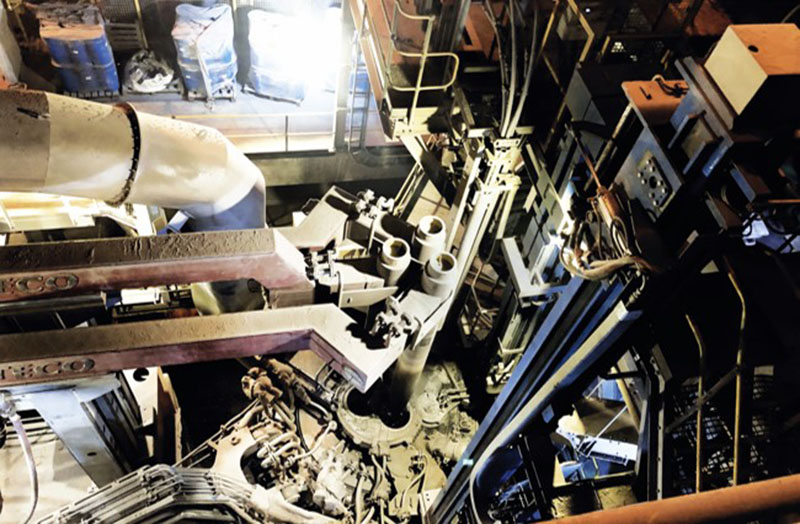
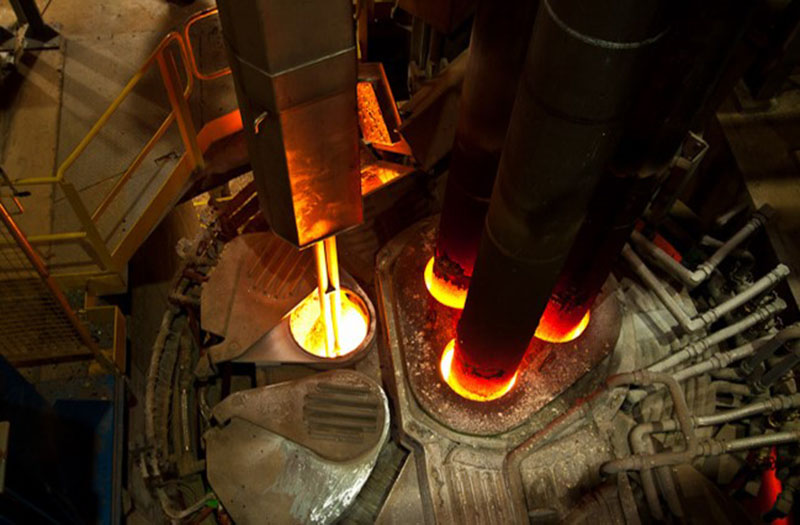
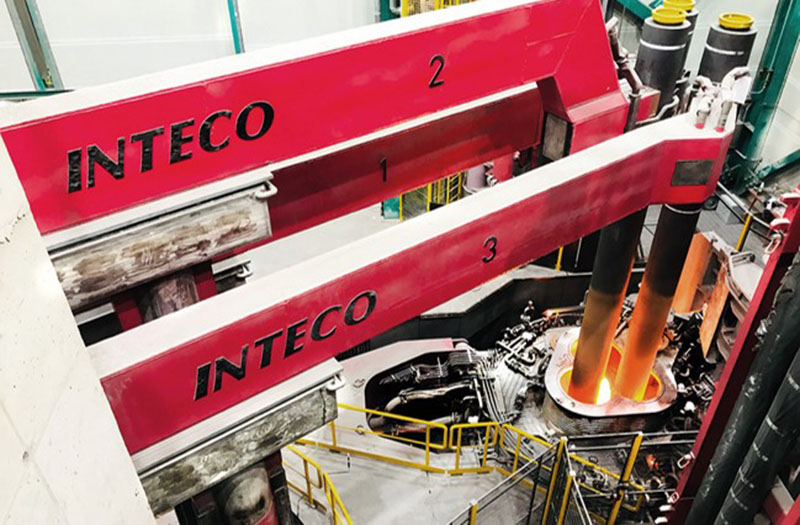
Pfannenöfen werden hauptsächlich in Elektrostahlwerken, jedoch auch vermehrt in Konverter-Stahlwerken installiert. Egal in welchem Einsatzbereich, INTECO bietet eine breite Palette an Lösungen für nahezu alle Pfannenofen-Installationen an. Dank INTECO’s maßgeschneiderten und platzsparenden Konstruktionen, können sie auf engstem Raum installiert werden. Dabei erfüllen sie sowohl die Anforderung von Spezialstahlherstellern mit einhergehenden sehr langen Behandlungszeiten als auch die Notwendigkeit kürzester Behandlungszeiten in Konverter-Stahlwerken. Unabhängig vom Einsatzzweck des Pfannenofens, legt man bei INTECO natürlich besonderen Wert auf ein zuverlässiges Design, welches für Wartungszwecke leicht zugänglich ist.
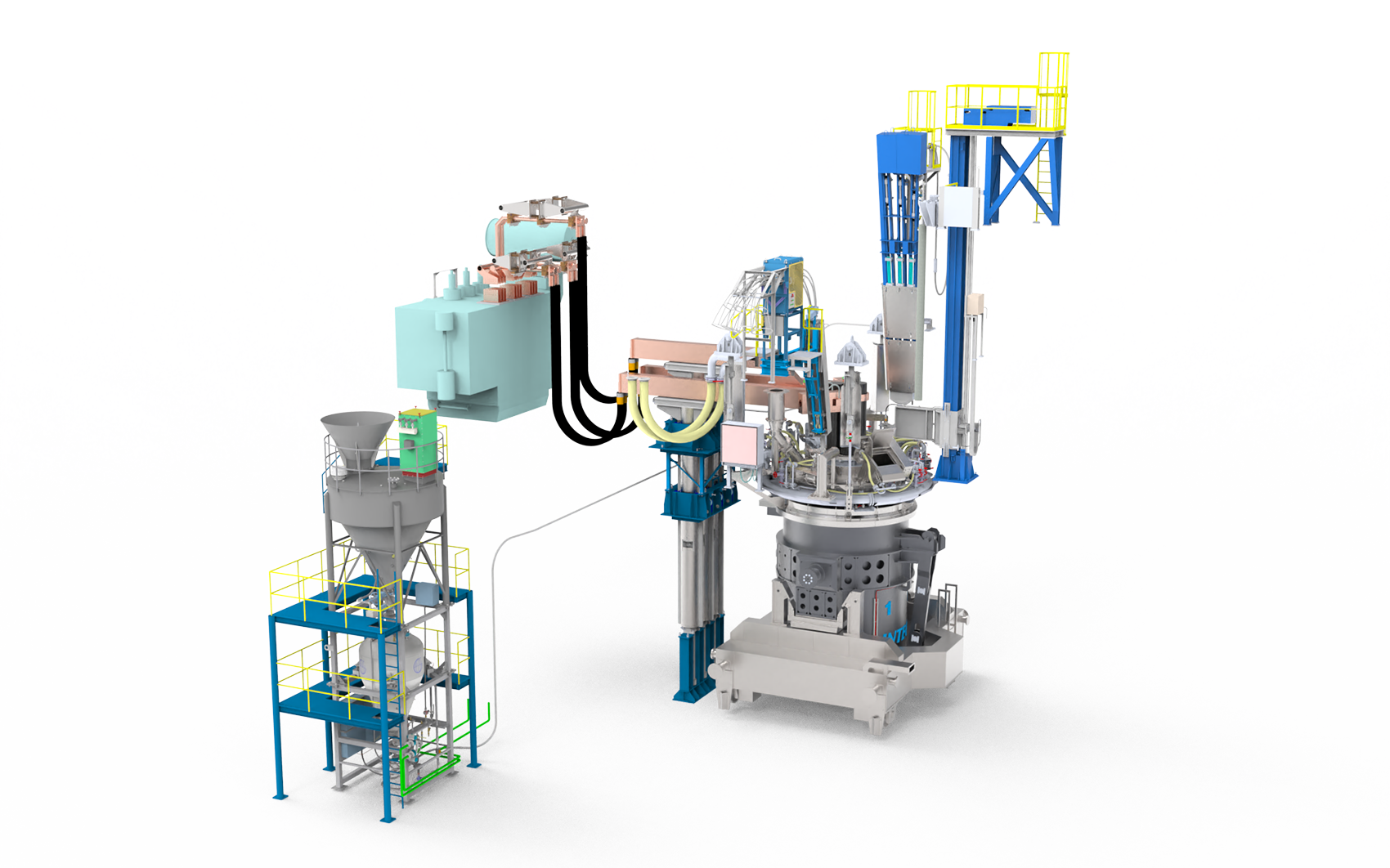
1) Top-Lanze
Top-Lanzen werden als Notspüllanzen (falls der Spülstein blockiert ist), oder zum Einblasen von Reaktionsmittel (z. B. CaO, C, CaC2) je nach metallurgischen Anforderungen verwendet.
1) Top-Lanze
Top-Lanzen werden als Notspüllanzen (falls der Spülstein blockiert ist), oder zum Einblasen von Reaktionsmittel (z. B. CaO, C, CaC2) je nach metallurgischen Anforderungen verwendet.
2) Temperaturmessungen und Probenahmen
Temperaturmessungen und Probenahmen, die von Robotern oder Manipulatoren durchgeführt werden, gewährleisten konstante und reproduzierbare Ergebnisse. Darüber hinaus reduzieren automatische Probemanipulationssysteme notwendige manuelle Arbeitsschritte.
3) Drahteinspulmaschine
Drahteinspulen ist die präziseste Methode, um kleine Mengen von Desoxidationsmitteln und Legierungen in die Schmelze einzubringen. INTECO liefert Drahteinspulmaschinen zusammen mit dem gesamten Drahtführungssystem vom Drahtbundlager zur Maschine.
4) Hochstromsystem
Ein sorgfältig konzipiertes Hochstromsystem (trianguliert mit minimaler Asymmetrie und Impedanz) in Kombination mit der INTECO-Elektrodenregelung gewährleistet einen niedrigen Energieverbrauch und hohe Heizraten.
5) Elektrodenhubsystem
Unabhängig von der Ausführung, ob stehend oder abgehängt, ist das Elektrodenhubsystem darauf ausgelegt, den verfügbaren Platz optimal zu nutzen. Schwenkportale werden bei Doppelpfannenöfen mit zwei Behandlungspositionen verwendet. Das wartungsfreundliche Führungssystem für die Elektrodensäulen gewährleistet eine einfache Einstellung der lebensdauergeschmierten Führungsrollen.
6) wassergekühlter Ofendeckel
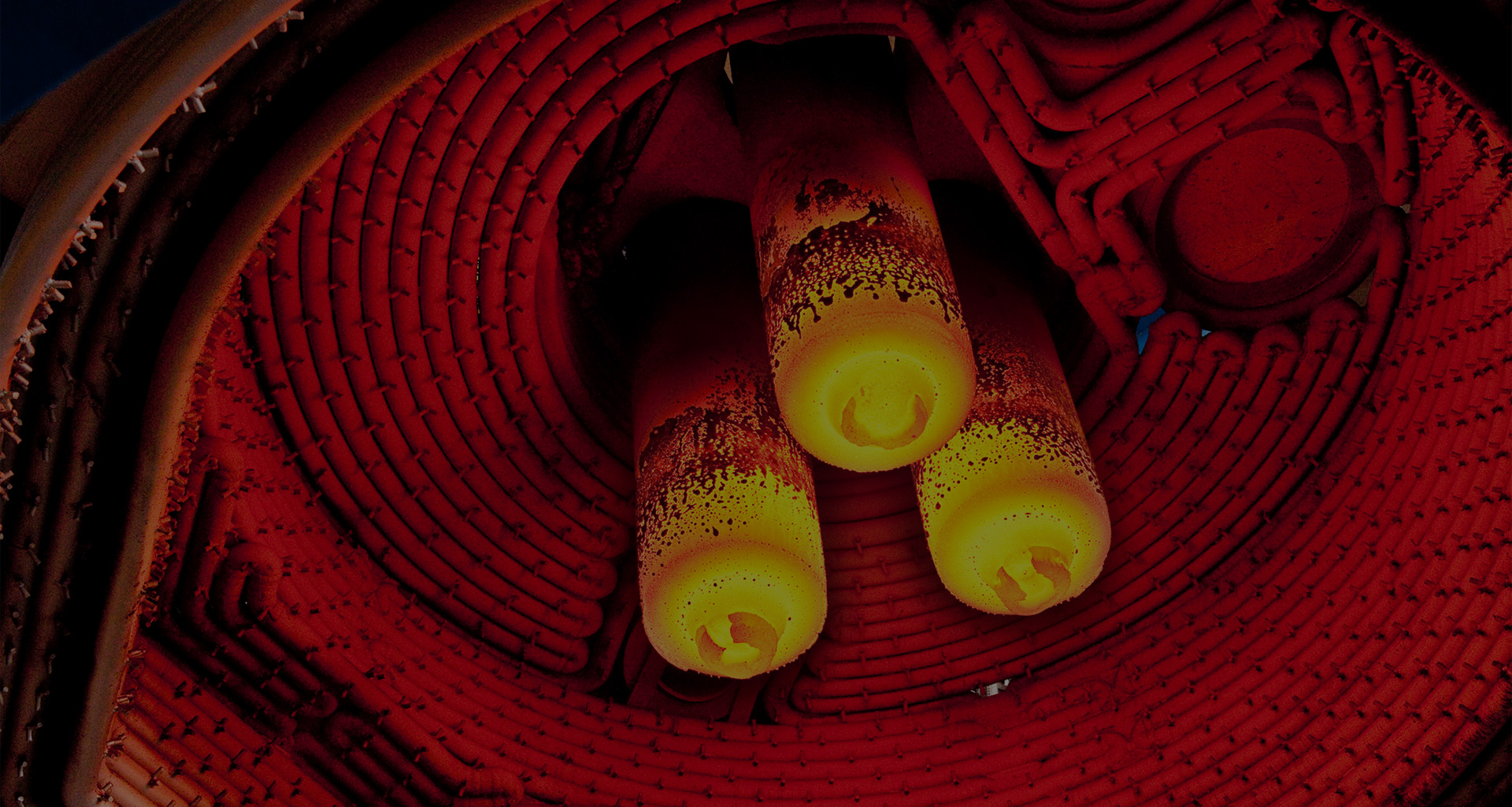
INTECO bietet den wassergekühlten Ofendeckel in verschiedenen Ausführungen an, darunter die bewährte Rohr-an-Rohr-Konstruktion oder aber auch mit glatter Innenseite, um Anbackungen zu minimieren. Das patentierte Deckeldesign garantiert minimale Reoxidation und einen geringen Elektrodenverbrauch.
7) Pfannenwagen
Der Pfannenwagen bewegt die Pfanne zwischen den Behandlungspositionen und kann mit einem Kipprahmen zum Abschlacken in Verbindung mit einem Abschlackstand ausgestattet sein. INTECOs am Wagen installierte Gaskuppler, ermöglichen eine vollautomatische Verbindung mit der Gasregelstrecke und erhöhen die Arbeitssicherheit dramatisch.
Top lances are used for emergency stirring (when the porous plug is blocked) or for injection of reagents (e.g. CaO, C, CaC2) according to the metallurgical requirements.
Temperature measurement and sampling done by manipulators or robots ensure consistent and reproducible results. Available solutions for automated probe handling minimize operator intervention.
Wire feeding is known as the most precise process to add small quantities of deoxidants and alloys into the melt. INTECO supplies wire feeding machines along with the entire wire guiding systems and coil storage.
The properly designed high current system, (triangulated, lowest asymmetry and impedance) in combination with INTECO’s electrode controller ensures low energy consumption and high heating rates.
Whether floor mounted or hanging, the electrode lifting system is designed to make optimum use of the available space. Rotating portals are used for INTECO’s Twin LF’s featuring two treatment positions. INTECO’s guiding system for the electrode columns is maintenance friendly and allows easy adjustment of the lifetime lubricated guide rolls.
The water-cooled furnace roof is available in different design variations (pipe to pipe, antistick flat design, …). INTECO’s patented roof design ensures minimum reoxidation and low electrode consumption.
Ladle transfer car to move the ladle between different treatment positions. The transfer car can be equipped with a tilting frame for deslagging in combination with a deslagging stand. INTECO‘s automatic gas couplers are smoothly integrated on the car connected to the gas stirring unit and greatly enhance operator safety.
• Einzel oder Doppelpfannenofen (mit Schwenkportal)
• Chargengrößen von 6 bis 300t
• Unterschiedliche Deckelausführungen (Rohr-an-Rohr-Konstruktion, glatte Innenseite)
• Stehendes oder abgehängtes Elektrodenhubsystem
• Pfannenwagen, optional mit Kippvorrichtung und oder Wiegesystem
• Pfannenspülung mittels Spülgas oder elektromagnetischer Rührspule
• Für Stahlwerke, Gießereien und zur Herstellung von Ferrolegierungen
- Pfannenofendeckel mit glatter Innenseite (Stahlblech oder Cu-plattiert)
- Schnell austauschbare Führungsrollen
- Automatisches Gaskupplungssystem
- ISEC Elektrodenregelung
- Leichte Zugänglichkeit für Wartung und Instandhaltung
- Sämtliche Nebenanlagen (Drahteinspulmaschine, T&P-Manipulator, etc.) aus einer Hand
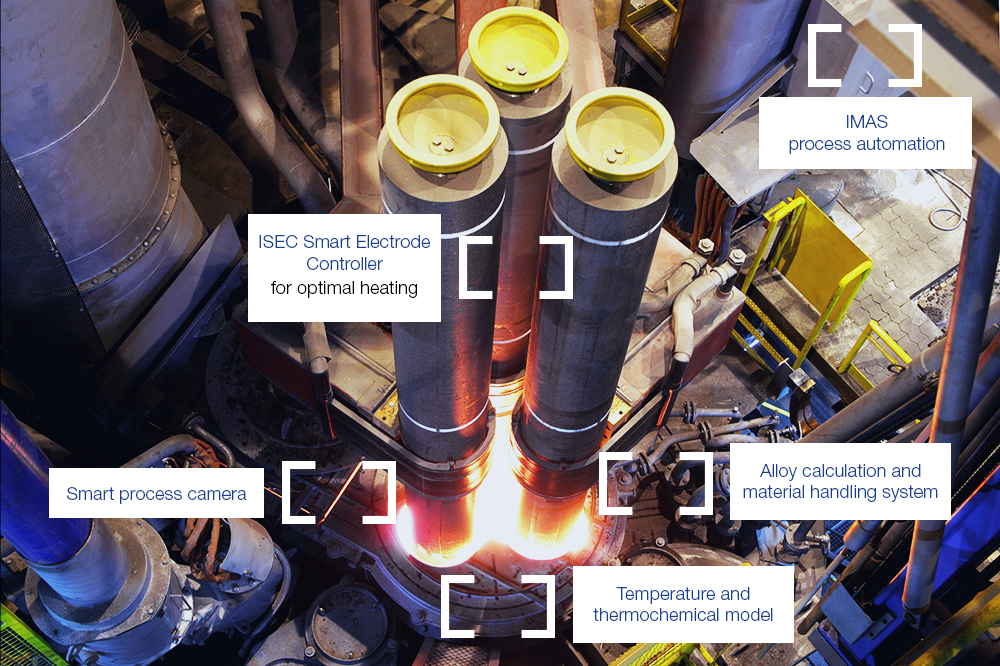
Digitalisierung und Smart Production sind die treibenden Kräfte für Entwicklung und Veränderung in der Stahlbranche. Bei INTECO bieten wir Ihnen nicht nur erstklassiges Engineering im Anlagenbau, sondern auch maßgeschneiderte digitale Lösungen, die den anspruchsvollen Anforderungen unserer Kunden gerecht werden. Überwachen Sie Ihre Produktion effizienter und nutzen Sie die gesammelten Informationen für Anpassungen und Fortschritt.
1) INTECO Smart Electrode Controller (ISEC)
for stable melting and heating
INTECO’s Smart Electrode Controller (ISEC) was developed to meet modern furnace operation requirements especially Electric Arc Furnaces and Ladle Furnaces. Designed to control different arc operations, the ISEC can also be applied to other types of electric furnaces for non-ferrous metals, ferro-alloys and even slag heating. The ISEC is based on a state-of-the-art embedded controller that allows high sampling rates and precise computations/calculations of all electric/power values in real time. For flexible operation and fast diagnostics, a modern web-based visualization system is integrated. It offers direct access to advanced information such as working points, control stability, arc lengths, and energy input. Moreover, the ISEC comes with advanced features such as automatic dip testing, automatic valve scaling, adaptive set point control, and a fuzzy logic based foaming slag manager. Standard interfaces such as PROFINET, PROFIBUS or Ethernet/IP facilitate simple integration in new or retrofit projects.
2) INTECO's smart process camera
to safely monitor operation
The smart process camera is a retractable and therefore well protected optical system that directly streams a high-resolution video to the control room to ensure safe low-manpower operation. The optional thermal imaging variant provides a clear view through smoke and dust and serves for automatic stirring adjustment. Additional generated process information such as slag height and stirring eye detection enhances metallurgical model accuracy and safety.
3) INTECO’s Material Handling System
for precise and fast alloying
INTECO’s Material Handling System Automation offers precise and time-critical alloying for all secondary metallurgy plants. Its recipe-based approach serves various technologies such as positive and negative weighing, shuttles, weighing bands, or hoppers and integrates micro-dosing systems and wire feeding machines. Moreover, it provides fallback modes for redundant feeding lines as well as sequential dosing of materials or material groups to add slag builders and alloys in the correct order.
4) Temperature and thermochemical model
for real-time temperature, steel and slag analysis
The temperature model accounts for the temperature losses due to radiation and convection as well as the changes in temperature due to purging, material addition and heating. Temperature changes due to reactions are also taken into account and are therefore coupled with the basic thermochemical model. Both are not only used to calculate the actual heat state but also to predict take-over time and temperature.
The thermochemical model calculates oxide and element activities based on current process conditions and events, current heat state and energy losses and gains. In this context, IMAS modeling includes a thermophysical property library, reaction enthalpies, coefficients for interactions providing the necessary parameters, and coefficients to determine and calculate the activities.
5) IMAS process automation
IMAS-PA-LF provides advanced top-down process guidance through dynamic or static treatment planning and integrated optimization tools. Process supervision is massively improved by the cockpit view and integrated real-time process models. IMAS provides instant real-time information and alerts, based on which the operators can control and steer the process just-in-time. The heat-based data recording stores sensor data, including complex information such as video streams, allowing observation of real-time data for quality assurance and process improvement.
INTECO’s Smart Electrode Controller (ISEC) was developed to meet modern furnace operation requirements especially Electric Arc Furnaces and Ladle Furnaces. Designed to control different arc operations, the ISEC can also be applied to other types of electric furnaces for non-ferrous metals, ferro-alloys and even slag heating. The ISEC is based on a state-of-the-art embedded controller that allows high sampling rates and precise computations/calculations of all electric/power values in real time. For flexible operation and fast diagnostics, a modern web-based visualization system is integrated. It offers direct access to advanced information such as working points, control stability, arc lengths, and energy input. Moreover, the ISEC comes with advanced features such as automatic dip testing, automatic valve scaling, adaptive set point control, and a fuzzy logic based foaming slag manager. Standard interfaces such as PROFINET, PROFIBUS or Ethernet/IP facilitate simple integration in new or retrofit projects.
The smart process camera is a retractable and therefore well protected optical system that directly streams a high-resolution video to the control room to ensure safe low-manpower operation. The optional thermal imaging variant provides a clear view through smoke and dust and serves for automatic stirring adjustment. Additional generated process information such as slag height and stirring eye detection enhances metallurgical model accuracy and safety.
INTECO’s Material Handling System Automation offers precise and time-critical alloying for all secondary metallurgy plants. Its recipe-based approach serves various technologies such as positive and negative weighing, shuttles, weighing bands, or hoppers and integrates micro-dosing systems and wire feeding machines. Moreover, it provides fallback modes for redundant feeding lines as well as sequential dosing of materials or material groups to add slag builders and alloys in the correct order.
The thermochemical model calculates oxide and element activities based on current process conditions and events, current heat state and energy losses and gains. In this context, IMAS modeling includes a thermophysical property library, reaction enthalpies, coefficients for interactions providing the necessary parameters, and coefficients to determine and calculate the activities.
The temperature model accounts for the temperature losses due to radiation and convection as well as the changes in temperature due to purging, material addition and heating. Temperature changes due to reactions are also taken into account and are therefore coupled with the basic thermochemical model. Both are not only used to calculate the actual heat state but also to predict take-over time and temperature.
IMAS-PA-LF provides advanced top-down process guidance through dynamic or static treatment planning and integrated optimization tools. Process supervision is massively improved by the cockpit view and integrated real-time process models. IMAS provides instant real-time information and alerts, based on which the operators can control and steer the process just-in-time. The heat-based data recording stores sensor data, including complex information such as video streams, allowing observation of real-time data for quality assurance and process improvement.
Projekte
thyssenkrupp Steel Europe
Columbus Stainless
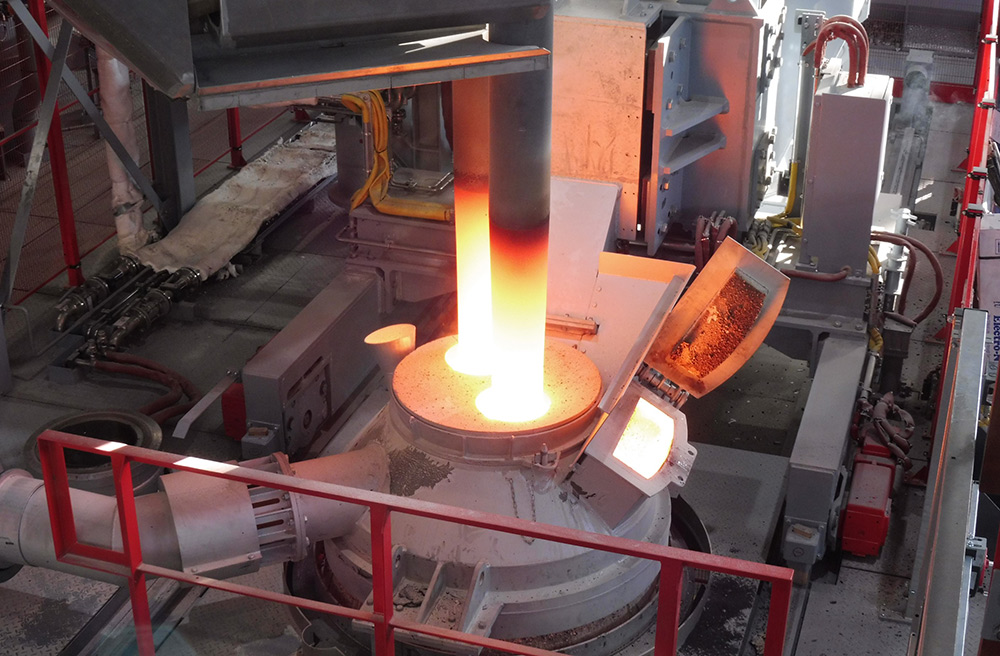
voestalpine Stahl Donawitz GmbH
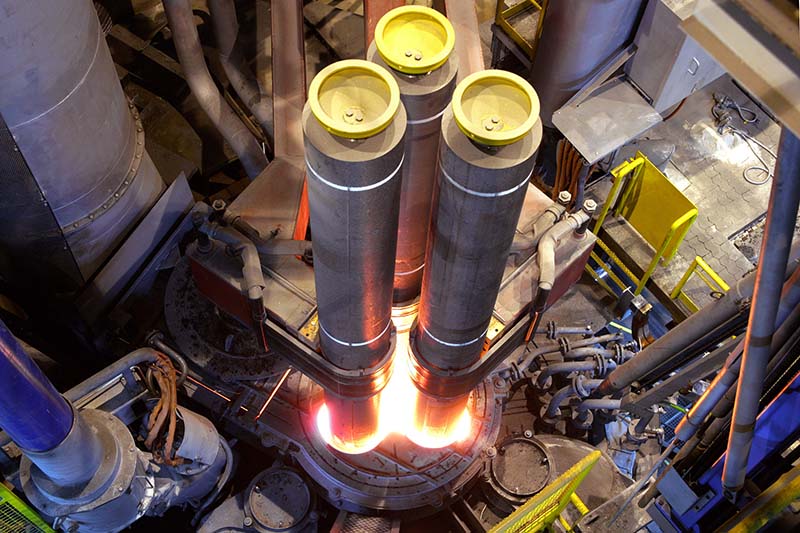
Saarstahl AG
Aperam