VAKUUM-INDUKTIONSSCHMELZPROZESS
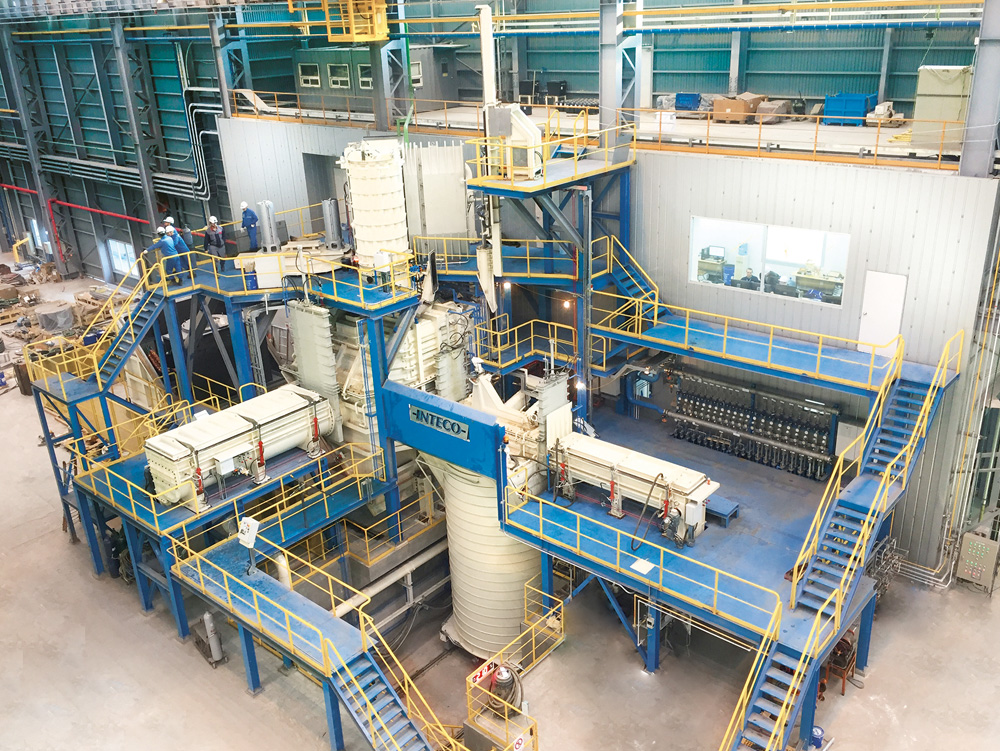
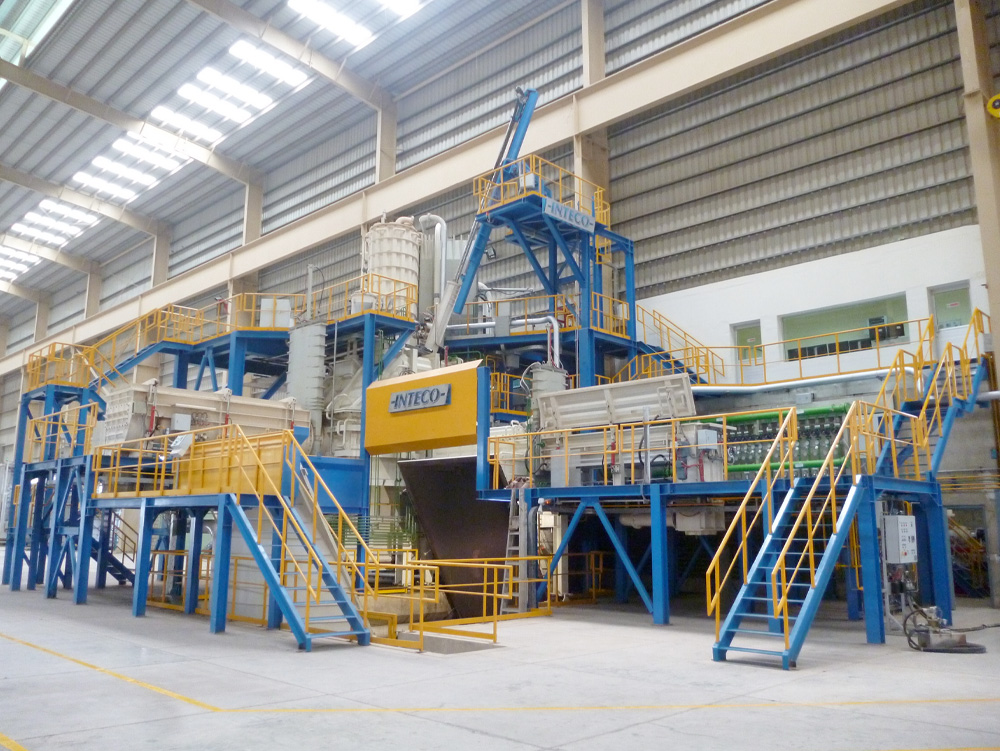
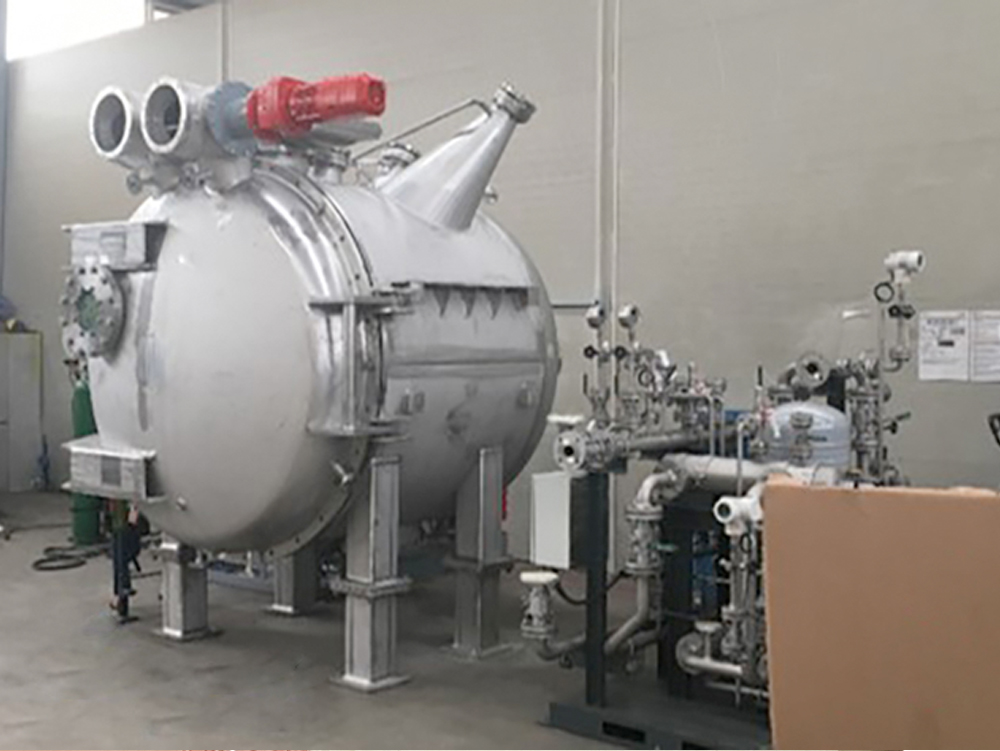
Der Vakuum-Induktionsschmelzprozess (VIM) wurde als wichtigstes primäres Vakuum-Induktionsschmelzverfahren für die moderne industrielle Produktion von Spezialstählen und Superlegierungen für anspruchsvollste Anwendungen entwickelt. Je nach Endanwendung werden im VIM-Verfahren hergestellte Blöcke oftmals als Elektroden in Elektroschlacke-Umschmelzverfahren (ESU) bzw. Vakuumlichtbogen-Umschmelzverfahren (VAR) eingesetzt. Schmelzen unter Vakuum hat eine lange Geschichte von mehr als 100 Jahren und wurde nach der Einführung der Induktionsöfen in den 1920er Jahren entwickelt. Während der frühen sechziger Jahre wurden größere industrielle VIM-Öfen entwickelt, um zunehmend größere Mengen an Hochtemperatur-Superlegierungen und ultrahochfesten Stählen zu erzeugen, die für die schnell wachsenden Luft- und Raumfahrtindustrie benötigt wurden. Heute wird das VIM-Verfahren vollständig unter Vakuum oder in einer kontrollierten Schutzgasatmosphäre durchgeführt und umfasst alle Arbeitsschritte von der Chargierung des Schrottes über das Erschmelzen bis hin zum Legieren, der Probenahme, der Temperatursteuerung, dem Gießen und der Erstarrung. Der VIM-Schmelzofen von INTECO ist als Mehrkammer-Konstruktion ausgeführt und bietet innovative Vorteile im Hinblick auf die Vakuumleistung, das Schmelzverfahren, die Gießmethode und die Anlageneffizienz, die es den Betreiber ermöglichen, zuverlässig und auf modernste und effizienteste Weise Werkstoffe in hoher Qualität zu produzieren.
- Einzel- oder Mehrkammerausführung
- Modulare Seitenchargierkammer, Separate Kammer zum Legieren kleinerer Mengen und T&P-Manipulator
- Gießkammer in Tunnel- oder Drehtellerausführung für die Blockproduktion oder Erzeugung kleiner Stäbe („bar sticks“)
- Oberguss und Unterguss möglich
- Gießen unter Vakuum, Schutzgas und Atmosphäre
- Wechsel des Tiegels im Heißzustand
- Separate Sinterposition
- Gießgeschwindigkeitsregelung
- Chargengrößen von Labormengen bis zu 30t
- Modulare Mehrkammerausführung mit kleinem Kammervolumen für höchste betriebliche Flexibilität und Zuverlässigkeit
- Diagonal geteilte Ausführung der Schmelz- und Gießkammer für optimalen Zugang und höchste Sicherheit
- Verfahrbarer Unterteil der Schmelzkammer bietet beste Zugänglichkeit für wichtige Reinigungs-, Kaltladungs-, Zustellungs- und Wartungsarbeiten
- Hocheffizientes und an die Prozessanforderungen angepasstes Vakuumsystem (reduzierte Pumpenstillstandszeit)
- Vertikale Ausführung aller prozessrelevanten Ventile (keine Einwirkung von Schmutz und Wärmestrahlung)
- Kürzeste Verteilerrinnenausführung für reduzierte Wärmeverluste
- Automatisches Kippgießsystem speziell entwickelt für kleinere Ofengrößen
- Maßgeschneidertes ergonomisches Design gemäß den kundenspezifischen Anforderungen
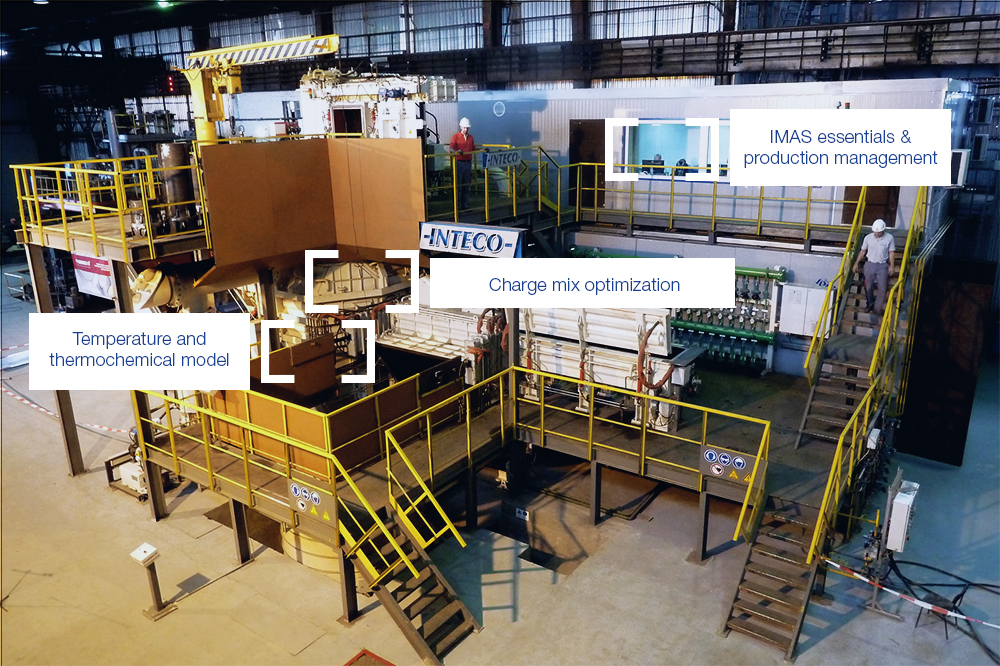
- Ganzheitliches Prozess- und Produktionsmanagement-System (IMAS) einschließlich kostenoptimierter Einsatzrechnung
Digitalisierung und Smart Production sind die treibenden Kräfte für Entwicklung und Veränderung in der Stahlbranche. Bei INTECO bieten wir Ihnen nicht nur erstklassiges Engineering im Anlagenbau, sondern auch maßgeschneiderte digitale Lösungen, die den anspruchsvollen Anforderungen unserer Kunden gerecht werden. Überwachen Sie Ihre Produktion effizienter und nutzen Sie die gesammelten Informationen für Anpassungen und Fortschritt.
1) Thermo-chemical or thermo-physical models
for real-time insight into your process
Thermo-chemical or thermo-physical models such as meltdown or temperature models provide real-time insight into your process.
2) cost-optimized charge mix calculation and optimization
for a cost-optimal charge mix
The cost-optimized charge mix calculation and optimization tool calculates the exact and cost-optimized material mix and quantity to achieve the target composition. The calculation can be based on previously prepared materials, on strategic material storage, or a combination of both, optimizing material handling by using broken lots. Micro-dosing units and segregation optimization for heavy elements can also be implemented. The tool supports compacting by considering fractional sizes, ensuring perfect physical compacting. Both, ingot and slab-based, as well as batch-based optimization are possible.
3) IMAS production management & IMAS essentials
for overall control of all parameters/functions from start to the end
The IMAS Production Management (IMAS-PM) manages conventional functions of a production management system such as recipe management, order scheduling, downtime recording as well as equipment and consumable consumption. Nevertheless, the main focus is on quality assurance. The integrated check-list module provides an aviation industry compliant solution for tracking every production step, not only in a generic way, but tailored to individual needs. You have the choice between a traditional, paper driven concept, an electronical, tablet-based application, or a combination of both. The production-based review system provides summary reports and detailed ingot or batch analysis for all relevant product categories such as ingots, slabs, powder, or flakes. The system includes rule-based deviation control modules and ensures that only high-quality products are being shipped. Technically, the system can be implemented into any existing production setup with a PLC-friendly standard interface such as OPC-UA and standardized REST interface for higher-level applications like ERP systems.
IMAS essentials are the perfect add-ons for single remelting units. The user-friendly web-based interface provides master data management for mould and electrode formats in multiple languages. The template-based melting recipe system facilitates standardization and aims for constant quality improvement. Detailed production reports, generated for each melting operation, include production key performance indicators and documentation of quality-related incidents. Information on the ingot position where the incident occurred, is calculated. The high-resolution trend tool allows in-depth analysis. All relevant data points are recorded in PLC cycle time and stored in a head-based structure. Time-synced available video streams from furnace cameras facilitate in matching visual inspection with process values.
Thermo-chemical or thermo-physical models such as meltdown or temperature models provide real-time insight into your process.
The cost-optimized charge mix calculation and optimization tool calculates the exact and cost-optimized material mix and quantity to achieve the target composition. The calculation can be based on previously prepared materials, on strategic material storage, or a combination of both, optimizing material handling by using broken lots. Micro-dosing units and segregation optimization for heavy elements can also be implemented. The tool supports compacting by considering fractional sizes, ensuring perfect physical compacting. Both, ingot and slab-based, as well as batch-based optimization are possible.
The IMAS Production Management (IMAS-PM) manages conventional functions of a production management system such as recipe management, order scheduling, downtime recording as well as equipment and consumable consumption. Nevertheless, the main focus is on quality assurance. The integrated check-list module provides an aviation industry compliant solution for tracking every production step, not only in a generic way, but tailored to individual needs. You have the choice between a traditional, paper driven concept, an electronical, tablet-based application, or a combination of both. The production-based review system provides summary reports and detailed ingot or batch analysis for all relevant product categories such as ingots, slabs, powder, or flakes. The system includes rule-based deviation control modules and ensures that only high-quality products are being shipped. Technically, the system can be implemented into any existing production setup with a PLC-friendly standard interface such as OPC-UA and standardized REST interface for higher-level applications like ERP systems.
Projekte
voestalpine Stahl Donawitz GmbH
SeAH CSS
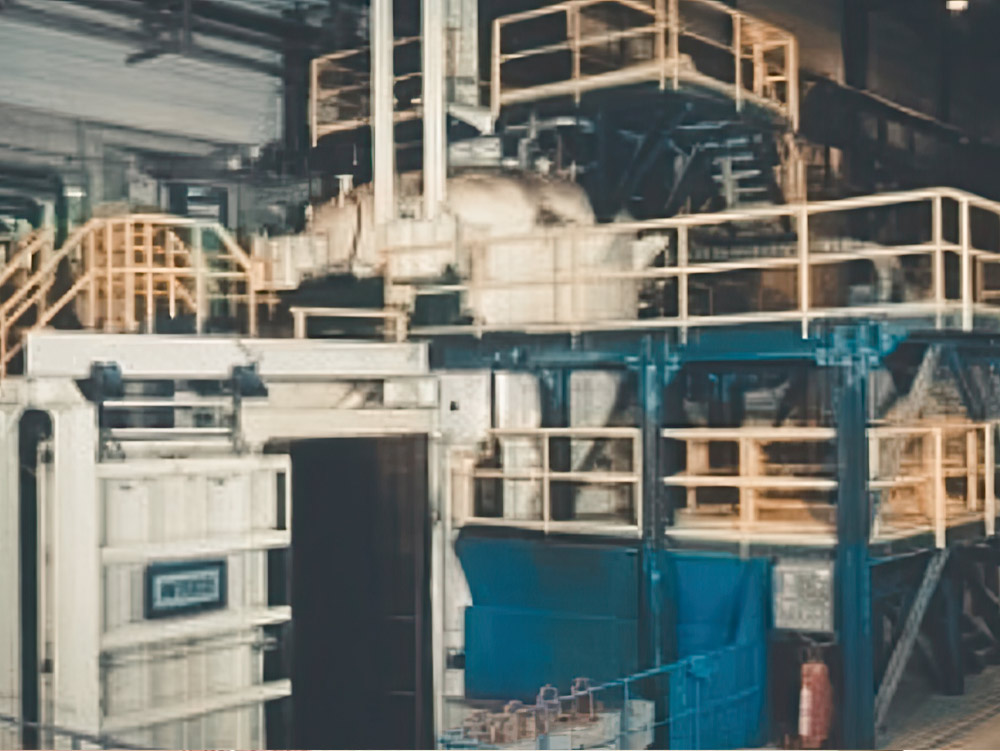
BGH Lippendorf
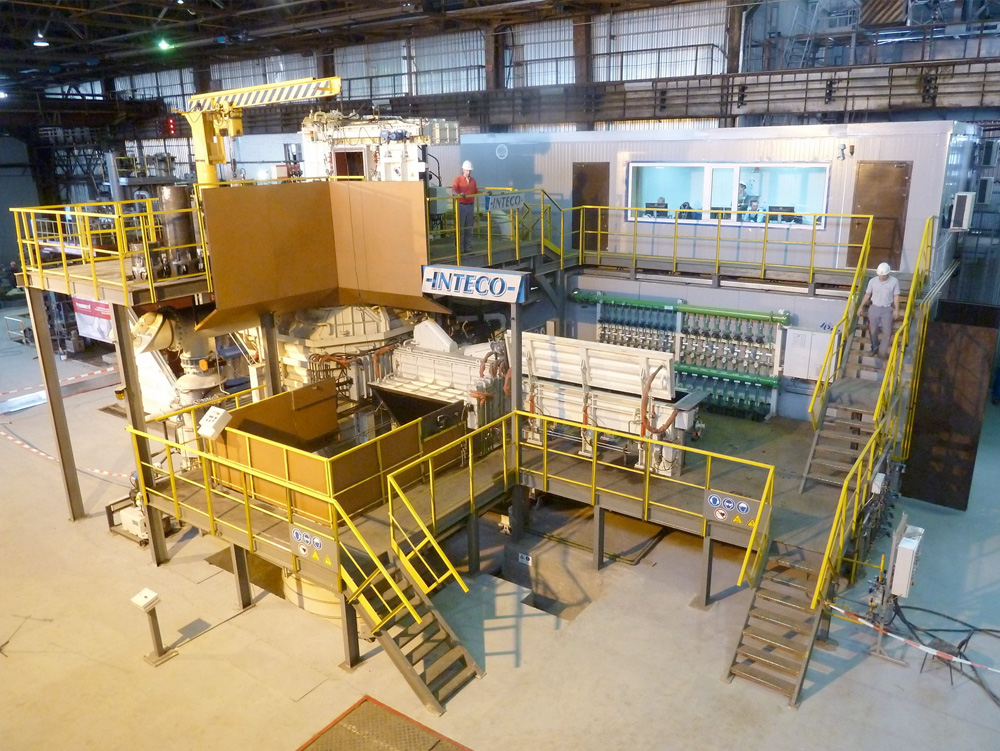
Ruspolymet